Give each room a short, distinctive name
Use a visible feature you will recognize again: a low red-pipe passage, a room with a cooking fire, or an arch beside ivy. Combine two cues when several rooms look alike—such as the object plus the lighting or ceiling height.
The developer built rooms around distinct silhouettes, landmarks, lighting and layouts. Treat those features as your navigation vocabulary instead of relying on a vague “left hallway.”
In the older demo frame below, the red pipe, low ceiling and green water make a stronger room signature than the stone walls alone.
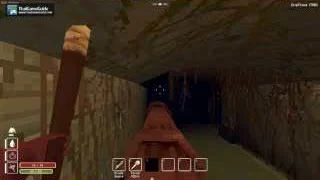
Watch the creator’s Hammer chapter
At a fork, record the entrance as well as the exit
- Pause at the junction. Pick a feature that marks the room you are leaving.
- Choose one branch. Record its visible cue and whether it climbs, drops or stays level. Example route note: “red pipe room → low passage, downward.”
- Turn around after entering. Notice how the return opening looks from this side. That is the view you will need later.
- Keep unresolved branches separate. Mark an unopened door by its object or obstacle instead of treating it as explored.
For a blocked branch, use the bars, webs and key-lock guide to identify the kind of next step required.
Track height, not just turns
The dungeon is interconnected and uses vertical space. Two passages that feel close in horizontal direction can be on different levels.
Add a height cue to each route note: stairs up, a drop down, a raised platform or a low passage. When retracing, reverse the height changes as well as the sequence of landmarks. If the surroundings stop matching your note, return to the last room you recognize rather than adding more guesses.
Use camp as an anchor for the return journey
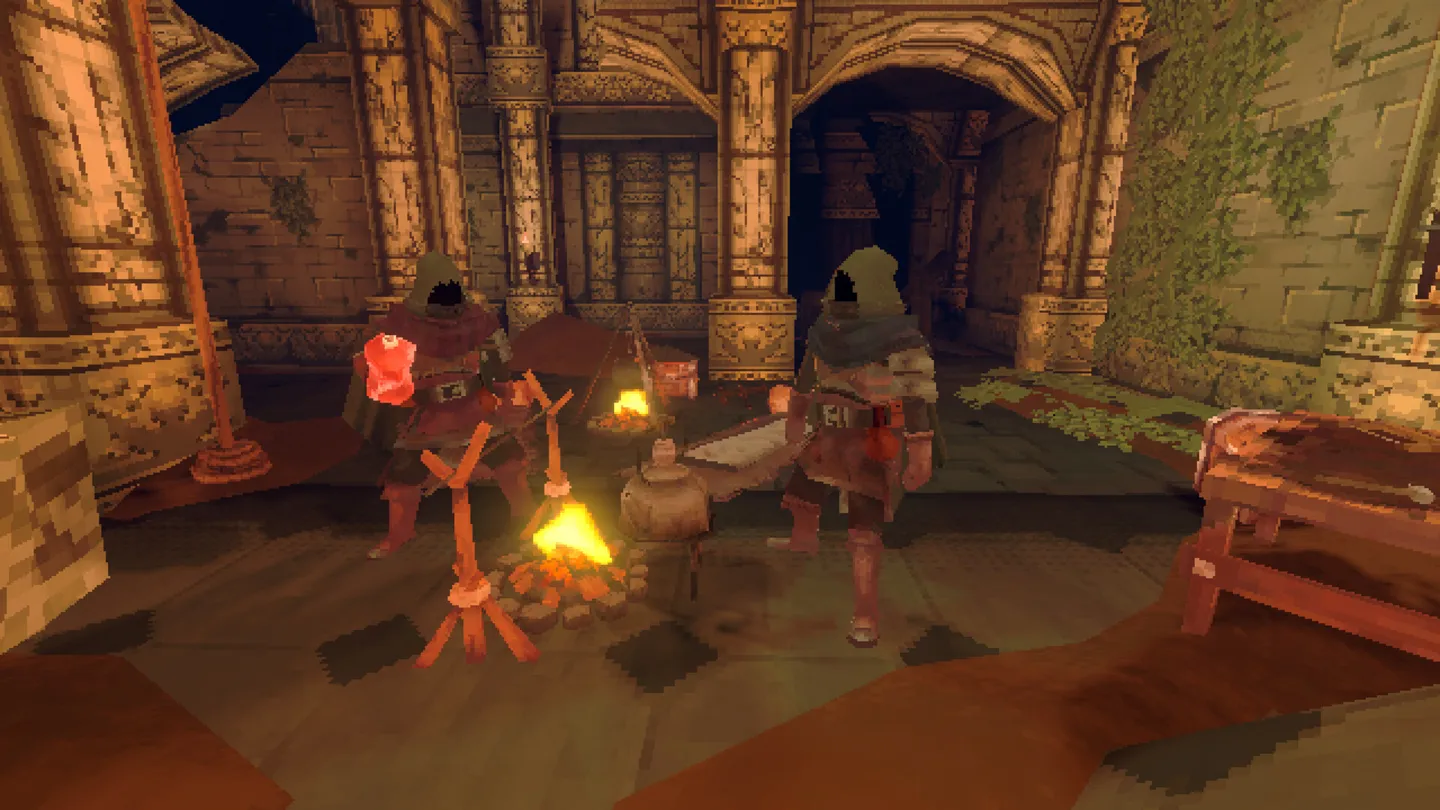
Before leaving, look back at the entrance you will return through and choose an unmistakable camp feature. The fire and nearby preparation objects make a useful meeting point for a party.
To return, work backward through your landmarks, checking the return-facing view at each fork. If you lose the chain, stop at the last familiar room and reconstruct that short segment before continuing.
The official scene below shows how several features can make a camp recognizable together: fire, carved arches and ivy.
Add a shortcut only after you recognize both ends
New links and shortcuts are part of the dungeon’s design. When you open one, identify the rooms on both sides and walk the short connection back once so you recognize the reverse view.
Keep the shortcut in your notes as a link between two named landmarks. For a tool-specific task, follow the Hammer’s older-demo pipe route.