Pack for one route task at a time
Use your next obstacle to decide what belongs in the trip load. Carrying every material can crowd out the item that lets you proceed.
- Prison approach: prioritize the Prison Key and Torch.
- Metal-bar task: prioritize the Hammer.
- Iron Key casting trip: group the mold, 5 Coal and 10 Scrap Metal.
- Every departure: consider the light and food you will need alongside that task's items.
See the obstacle checklist if you have not identified the next blocker.
Budget capacity separately from food storage
For a known capacity increase, the Pouch costs 2 Leather and 2 Vines at a Workbench and adds 3 inventory slots. The Backpack uses 1 Leather, 2 Ragged Cloth and 1 Rope through hand crafting; its description warns that it is very heavy.
Start with the Pouch when you want that clearly budgeted three-slot gain. If Leather is missing, pick up a piece to unlock its recipe, then make more from Animal Hide. For the Backpack component, Rope costs 2 Vines and 1 Stick.
A Food Basket serves a different purpose: it slows spoilage, rather than being a carrying-capacity upgrade. Keep the trip load and camp food-care plan separate.
Organize physical items at camp
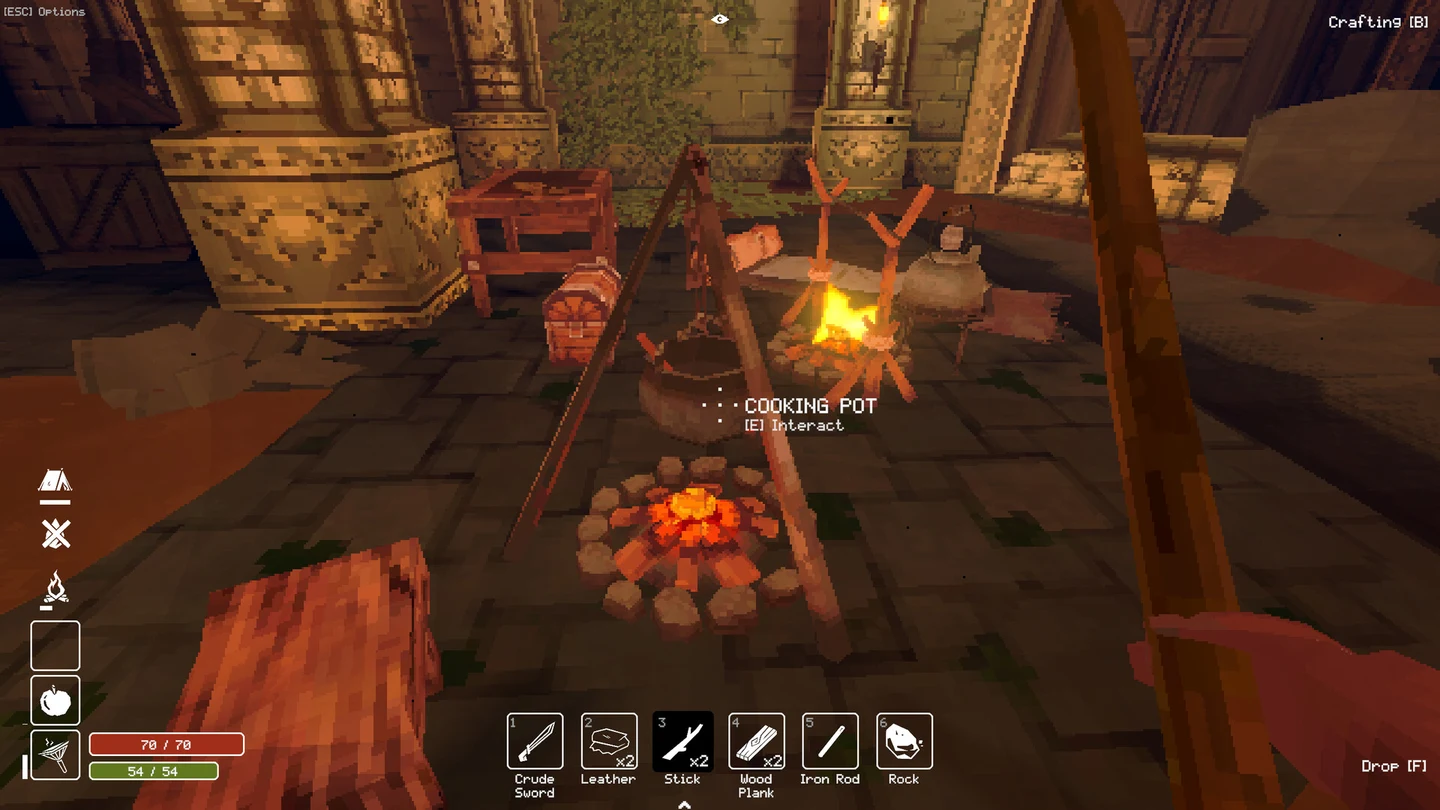
Pick up items, pile bulk materials in a corner, place useful objects on a table, or throw an item to a teammate. Use the physical camp space to separate the next trip's essentials from later crafting materials.
Keep the key and route tool together, food near the cooking task, and bulk ingredients in a distinct group. Agree on those groups with teammates so the next load is easy to find.
Free space and fresh food are not the same benefit
Moving an item out of your carried load is an organization decision. Keeping food fresh is a food-care decision, with a specific Food Basket mechanic in v1013.
Do not assume that putting a meal in an ordinary chest stops it spoiling. Read the cooking guide before leaving prepared food at camp for a later expedition.
Run a short departure check
- Name the next task: a lock, a tool barrier, or a casting trip.
- Check that its key, tool or inputs are in the trip load.
- Make room for light and food rather than filling the load with unrelated materials.
- Leave the remaining materials in a clearly organized group for your next camp task.
If you are deciding what to make with those materials, continue to camp crafting.
Physical-item design reference
The physical-item examples and limited carrying design come from the developer's crafting and exploration account.
Sources
- Behold Studios: crafting and physical items
- Official demo updates
- Official Deep Dish Dungeon Steam screenshots
- NPC Tips: demo keys and the prison
- Steam players: burning spider webs with a Torch
- NPC Tips: Leather unlock and Rat processing
- MeowDB: demo v1013 crafting inputs and stations
- MeowDB: demo v1013 item descriptions
- Steam player reply: finding Leather before crafting